Confirm
Property authority, exact run, service scope, and what stays.
Plan one container around the full fence-removal load. Address-level availability and the accepted material mix must be confirmed before delivery.
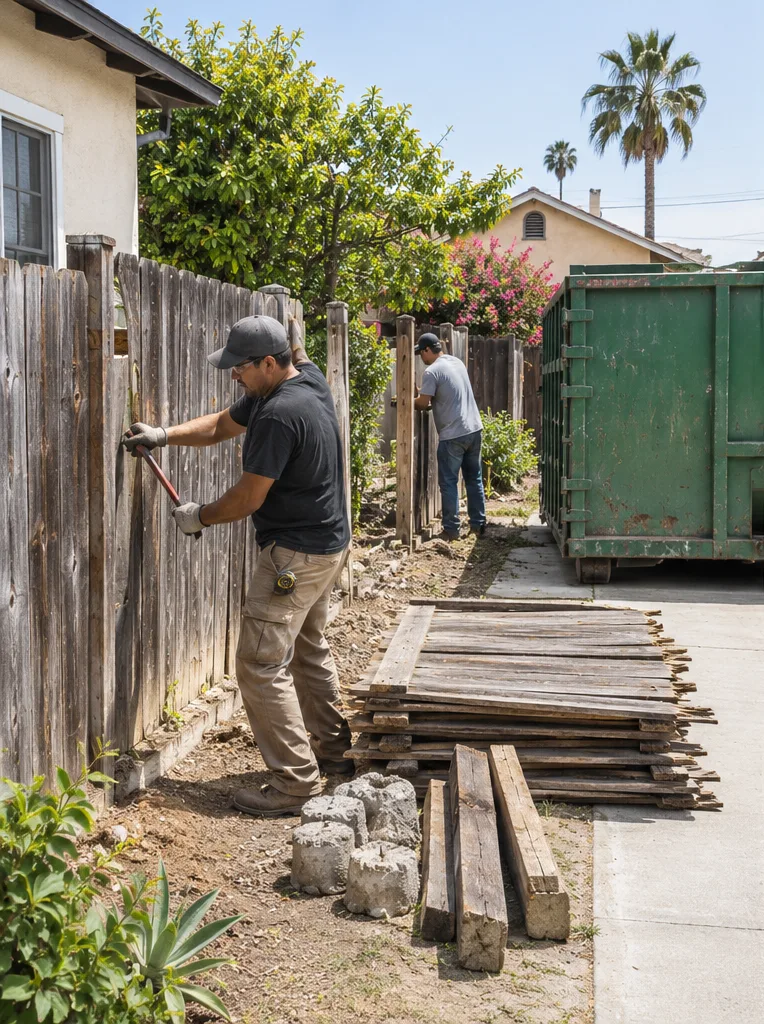
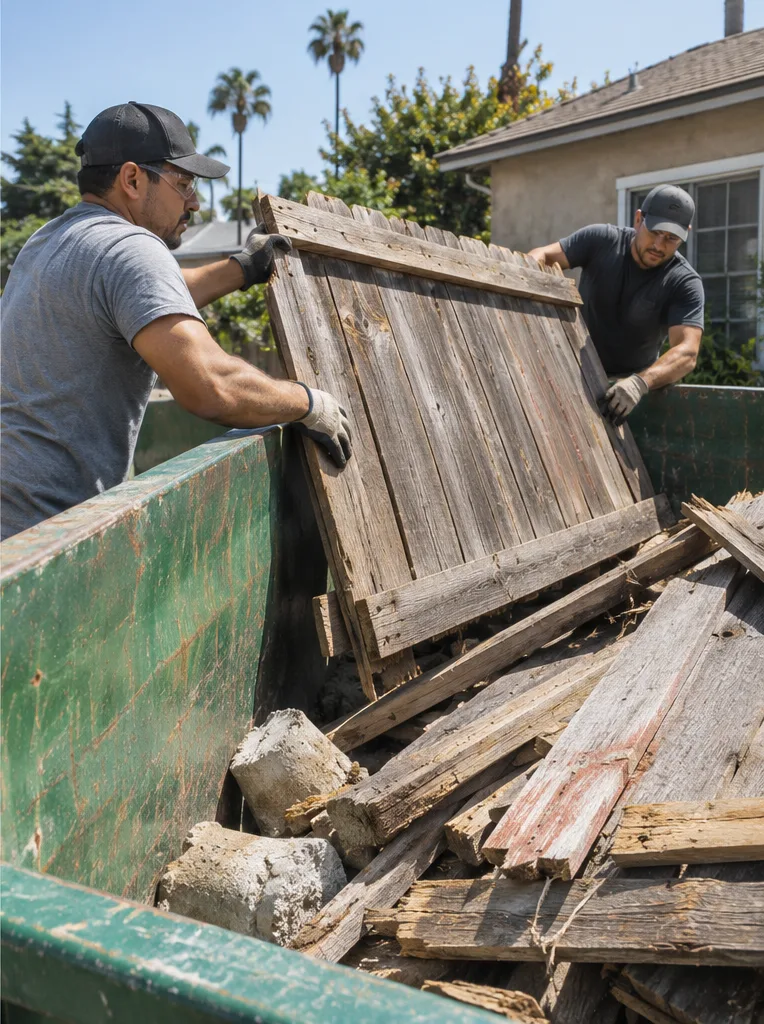
This service is planned around wood, chain-link, vinyl, gates, posts, ordinary hardware, and disclosed concrete footing debris.
Estimate the fence length, identify the material mix, count gates and posts, and show where the container can sit.
Paints, chemicals, batteries, pressurized cylinders, asbestos-containing material, and other regulated waste need separate approval and should not be placed in the container by assumption.
Keep the sequence simple enough that workers, new materials, pedestrians, and the delivery truck do not compete for the same path.
Property authority, exact run, service scope, and what stays.
Separate materials and contain loose hardware before loading.
Place long and heavy pieces without protrusion or unstable voids.
Keep pickup access open and report changes before the load leaves.
Photographs help explain the fence and route, but the provider still needs the address, timing, and debris description.
Estimate the fence length, identify the material mix, count gates and posts, and show where the container can sit.
Approximate fence length and height, Material mix and current condition, Posts, gates, and visible concrete, Container placement and truck access.
Paints, chemicals, batteries, pressurized cylinders, asbestos-containing material, and other regulated waste need separate approval and should not be placed in the container by assumption.
Los Angeles is the primary market. Nearby-city pages are proposed planning pages; exact coverage requires address confirmation.
Use the complete service directory or read the guide paired with this material.
 Fence Disposal Dumpster RentalKeep dismantled fence material contained between removal and pickup.Wood Fence Removal Dumpster RentalStage weathered boards, rails, posts, and gates for a compact load.Chain Link Fence Removal Dumpster RentalPlan for springy fabric, long posts, rails, gates, and fittings.Vinyl Fence Removal Dumpster RentalKeep hollow panels, rails, caps, and hardware organized for loading.Fence Debris Dumpster RentalContain the mixed offcuts and footing debris left after a fence comes down.Fence Replacement Dumpster RentalKeep old-fence debris out of the new-material staging area.
Share the material, approximate length, posts, visible footings, access, and service address.